




การสัมมนา “แนวทางขับเคลื่อนบัญชีรายการตรวจวินิจฉัยภายนอกร่างกายที่จำเป็นแห่งชาติ (National Essential in Vitro Diagnostics List: NEDL)”

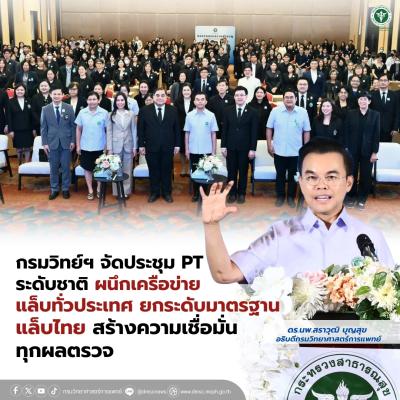
เมื่อวันที่ 21 พฤศจิกายน 2568 ดร.พิไลลักษณ์ อัคคไพบูลย์ โอกาดะ ผู้อำนวยการสถาบันวิจัยวิทยาศาสตร์สาธารณสุข ได้กล่าวรายงานต่ออธิบดีกรมวิทยาศาสตร์การแพทย์ ดร.นพ.สราวุฒิ บุญสุข อธิบดี ประธานในพิธีเปิดการประชุม และได้รับเกียรติจาก Dr.Olivia Nieveras, Senior Public Health Specialist ซึ่งเป็นผู้แทนของ Dr.Ailan Li, WHO Representative to Thailand กล่าวปาฐกถา ซึ่งองค์การอนามัยโลก (WHO) ได้สนับสนุนให้มีการพัฒนาบัญชี NEDL ตามบริบทของแต่ละประเทศ ซึ่งประเทศไทยได้ดำเนินการจัดทำบัญชีรายการตรวจวินิจฉัยภายนอกร่างกายที่จำเป็นแห่งชาติ ตามแนวทางของ WHO โดยบัญชี NEDL ฉบับแรกและได้เผยแพร่ในเดือนกันยายน พ.ศ.2568 การสัมมนาครั้งนี้ ได้นำเสนอผลการดำเนินงานจากการจัดทำบัญชี NEDL และแนวทางการนำไปใช้ในหน่วยบริการ ที่จะขับเคลื่อนในระดับเขตสุขภาพผ่าน “โครงการนำร่อง” เพื่อให้สามารถประยุกต์ใช้ให้เหมาะสมกับสถานการณ์ด้านสาธารณสุขและศักยภาพของแต่ละจังหวัด ทั้งด้านบุคลากร ห้องปฏิบัติการ เครื่องมือ และระบบงบประมาณ รวมทั้งแนวทางเชิงปฏิบัติเพื่อบูรณาการบัญชี NEDL เข้ากับระบบบริการของสถานพยาบาล รวมทั้งการพัฒนาศักยภาพบุคลากร เพื่อให้การนำ NEDL ไปใช้เกิดประสิทธิผลสูงสุด และนำบัญชี NEDL ไปใช้ในระดับพื้นที่อย่างเป็นรูปธรรม


On November 21, 2025, Dr. Pilailuk Akkapaiboon Okada, Director of the National Institute of Health, delivered a report to the Director-General, Dr. Sarawut Boonsuk, who presided over the opening of the meeting. The ceremony was honored by the presence of Dr. Olivia Nieveras, Senior Public Health Specialist and representative of Dr. Ailan Li, WHO Representative to Thailand, to deliver her remarks. This meeting encourages member states to develop their own NEDL according to national contexts. Thailand has developed the NEDL in accordance with WHO guidelines. The first edition of the NEDL was published in September 2025. This seminar presented the outcomes of the NEDL development process and outlined approaches for implementing the list in health facilities. The implementation will be driven at the regional health level through “pilot projects,” enabling adaptation to the public health context and the capacity of each area including personnel, laboratories, and equipment including budged systems. The seminar also discussed practical guidance for integrating the NEDL into healthcare service systems, as well as strategies for strengthening human resource capacity to ensure the most effective use of the NEDL and its concrete application at the local level.
